画像生成のコツ

見本:Visual Abstract

本物を手本に渡すと、ここまで行ける。左が手本にした実物(使ってよい条件を確かめたもの)、右がそれを渡して作った1枚です。配置と描き方だけを写し、中身は全部こちらで決めて渡しました。押すと大きく開きます。

Visual Abstractの見本 5枚。どれも研修用の架空のデータです。

コホート研究(点の図)

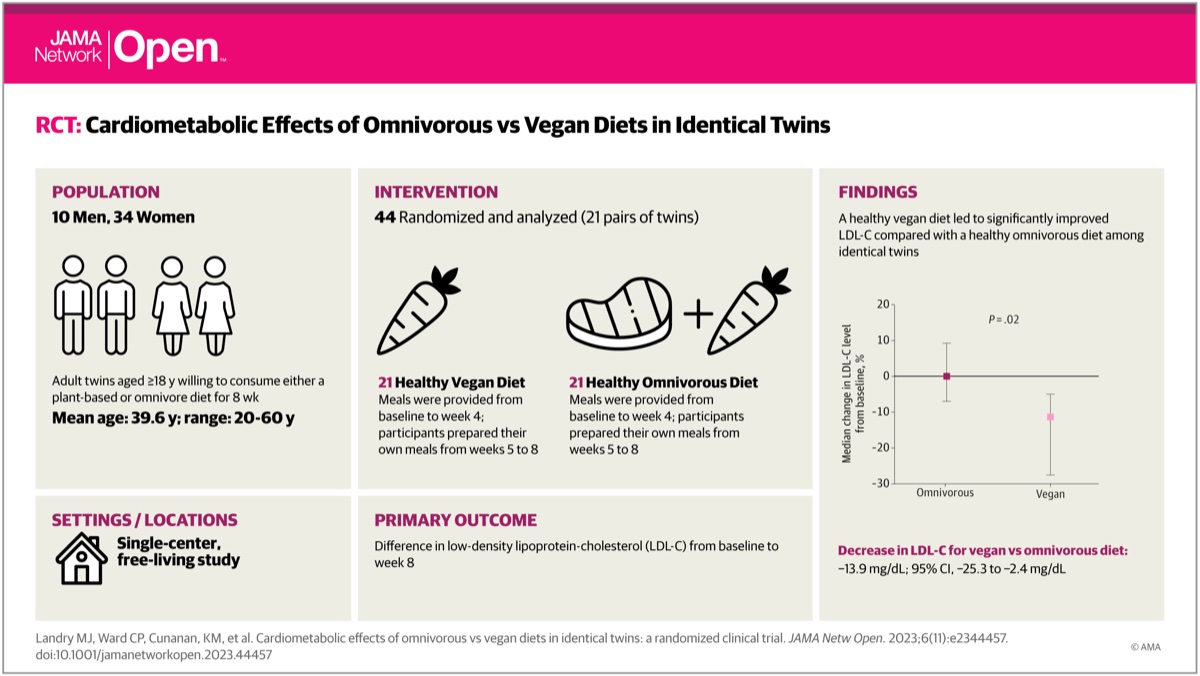
コホート研究(点の図)の手本にした実物
手本にした実物Landry MJ, et al. JAMA Netw Open. 2023;6(11):e2344457(CC BY 4.0)
コホート研究(点の図)を画像AIで作った1枚
画像AIで作った1枚研修用の架空のデータ

頼んだこと医学誌の実物を手本に渡し、「配置・欄・文字の大きさ・アイコンの描き方はそのまま、色を変えて、中身をこれに入れ替えて」と頼んだ。雑誌名とロゴは外すと書いた

頼んだ文を見る
Use the attached visual abstract as an exact template. Keep the identical layout, panel grid and sizes, sharp panel corners, panel background color, gutters, font family, font sizes and weights, text density, line-icon drawing style, chart style and the citation line position. Change the accent color from magenta to deep teal (#00727A). Replace the top band's logo with nothing (keep the empty colored band).
Replace the content as follows:
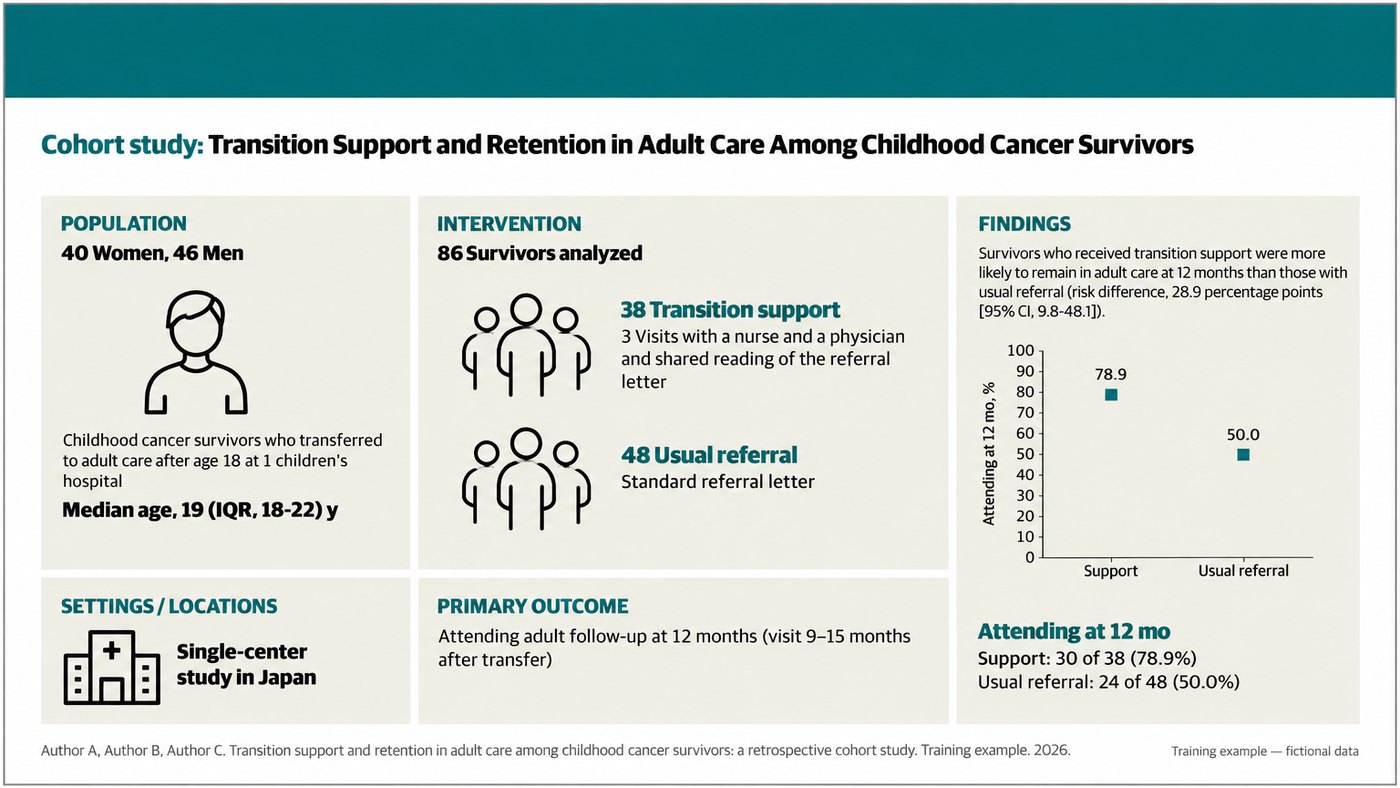
Title line: "Cohort study:" (accent color) followed by "Transition Support and Retention in Adult Care Among Childhood Cancer Survivors"
POPULATION panel: "40 Women, 46 Men" (bold), a line-drawn icon of a young adult, "Childhood cancer survivors who transferred to adult care after age 18 at 1 children's hospital", "Median age, 19 (IQR, 18-22) y" (bold).
INTERVENTION panel: "86 Survivors analyzed" then two groups with line icons of people: "38 Transition support" (accent color, bold) "3 Visits with a nurse and a physician and shared reading of the referral letter"; "48 Usual referral" (accent color, bold) "Standard referral letter".
FINDINGS panel: "Survivors who received transition support were more likely to remain in adult care at 12 months than those with usual referral (risk difference, 28.9 percentage points [95% CI, 9.8-48.1])." and a small dot plot like the template's chart, but with two plain square points only (no error bars, no whiskers, no P value, no reference line) and labels "Support" "Usual referral", y axis "Attending at 12 mo, %" from 0 to 100, values 78.9 and 50.0; below: "Attending at 12 mo" (bold accent) "Support: 30 of 38 (78.9%)" "Usual referral: 24 of 48 (50.0%)".
SETTINGS / LOCATIONS panel: a line icon of a hospital building and "Single-center study in Japan" (bold).
PRIMARY OUTCOME panel: "Attending adult follow-up at 12 months (visit 9–15 months after transfer)".
Citation line: "Author A, Author B, Author C. Transition support and retention in adult care among childhood cancer survivors: a retrospective cohort study. Training example. 2026."
In a small corner add exactly: "Training example — fictional data". Use only the quoted text for any new text. Do not keep any of the original words, names, logos, journal names, institution names or numbers from the template.
質改善の研究(棒グラフ)

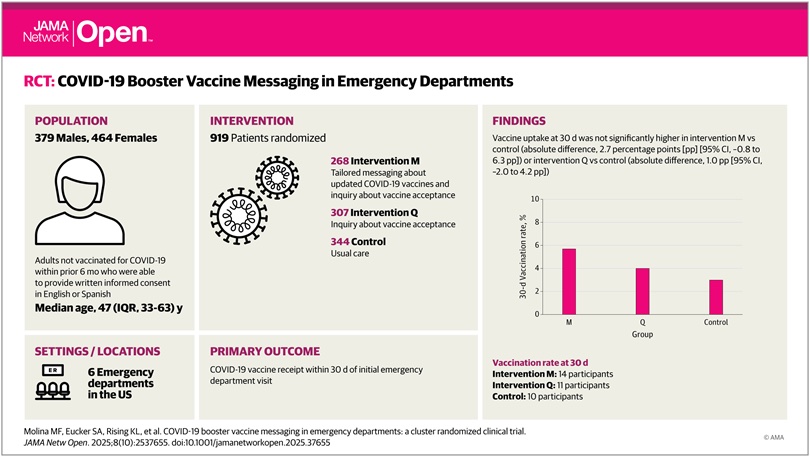
質改善の研究(棒グラフ)の手本にした実物
手本にした実物Molina MF, et al. JAMA Netw Open. 2025;8(10):2537655(CC BY 4.0)
質改善の研究(棒グラフ)を画像AIで作った1枚
画像AIで作った1枚研修用の架空のデータ

頼んだこと同じ雑誌の別の実物を手本に、題材をカテーテル感染の質改善研究に入れ替えた。研究の型を題の前に書き、棒グラフ・件数・率の比と95%信頼区間まで渡した

頼んだ文を見る
Use the attached visual abstract as an exact template. Keep the identical layout, panel grid and sizes, sharp panel corners, panel background color, gutters, font family, font sizes and weights, text density, line-icon drawing style, bar chart style and the citation line position. Change the accent color from magenta to deep blue (#1F4E8C). Replace the top band's logo with nothing (keep the empty colored band).
Replace the content as follows:
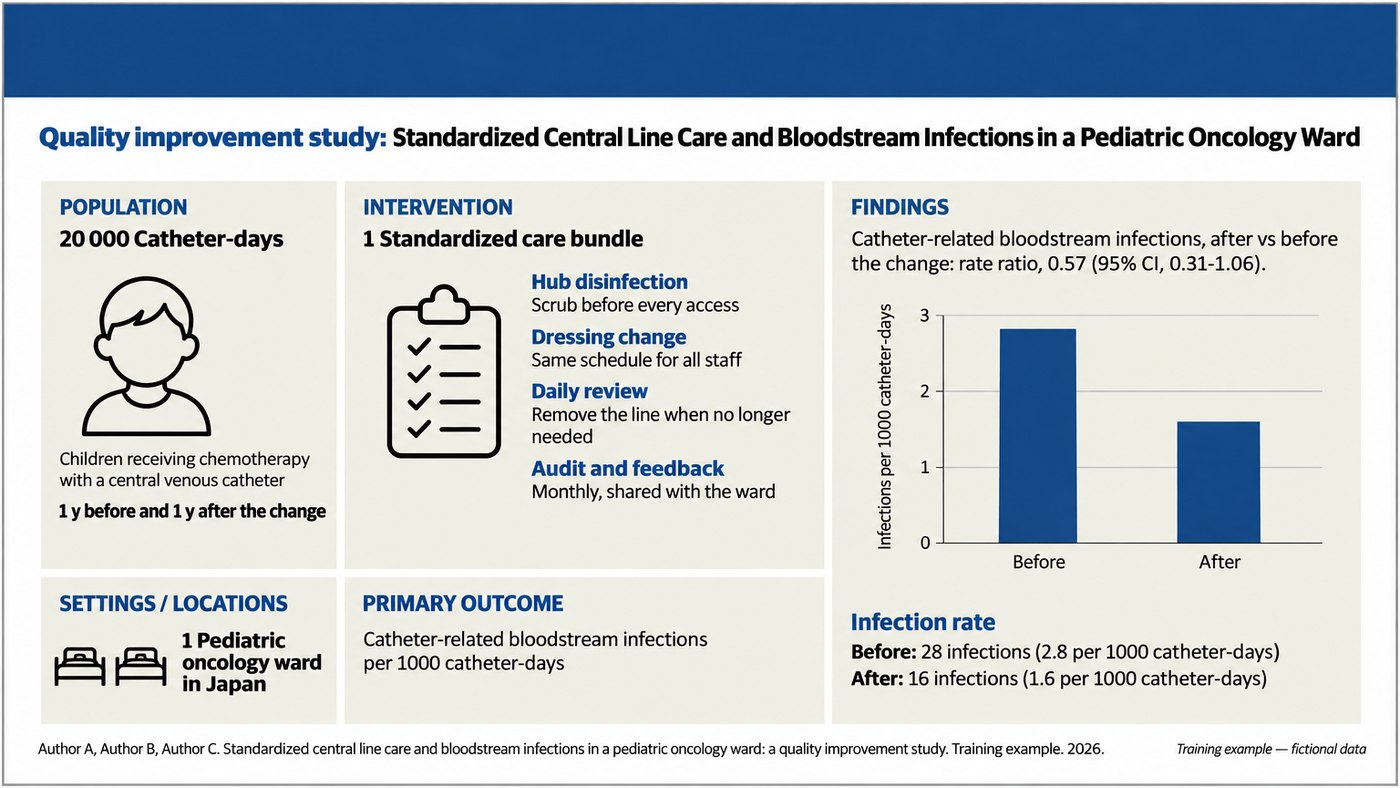
Title line: "Quality improvement study:" (accent color) followed by "Standardized Central Line Care and Bloodstream Infections in a Pediatric Oncology Ward"
POPULATION panel: "20 000 Catheter-days" (bold), a line-drawn icon of a child patient, "Children receiving chemotherapy with a central venous catheter", "1 y before and 1 y after the change" (bold).
INTERVENTION panel: "1 Standardized care bundle" then a line icon of a clipboard with checkmarks and four lines: "Hub disinfection" (accent, bold) "Scrub before every access"; "Dressing change" (accent, bold) "Same schedule for all staff"; "Daily review" (accent, bold) "Remove the line when no longer needed"; "Audit and feedback" (accent, bold) "Monthly, shared with the ward".
FINDINGS panel: "Catheter-related bloodstream infections, after vs before the change: rate ratio, 0.57 (95% CI, 0.31-1.06)." and a small vertical bar chart like the template's with two accent-colored bars labelled "Before" and "After", y axis "Infections per 1000 catheter-days" from 0 to 3, bar heights 2.8 and 1.6; below: "Infection rate" (bold accent) "Before: 28 infections (2.8 per 1000 catheter-days)" "After: 16 infections (1.6 per 1000 catheter-days)".
SETTINGS / LOCATIONS panel: a line icon of hospital beds and "1 Pediatric oncology ward in Japan" (bold).
PRIMARY OUTCOME panel: "Catheter-related bloodstream infections per 1000 catheter-days".
Citation line: "Author A, Author B, Author C. Standardized central line care and bloodstream infections in a pediatric oncology ward: a quality improvement study. Training example. 2026."
Do not keep any of the original words, names, logos, website addresses, institution names or numbers from the template. Use only the quoted text for any text in the image. All digits half-width. Add in small text in a corner exactly: "Training example — fictional data".
円形の図(内訳を帯で見せる型)

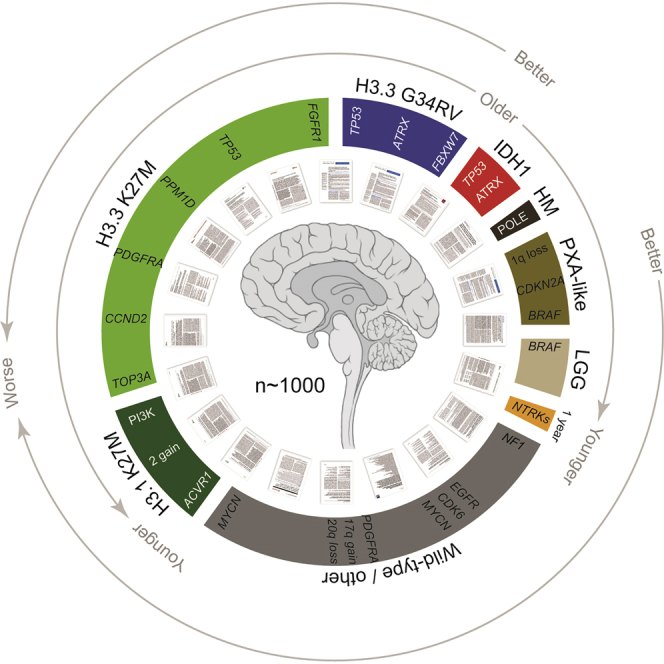
円形の図(内訳を帯で見せる型)の手本にした実物
手本にした実物Mackay A, et al. Cancer Cell. 2017;32(4):520-537.e5, graphical abstract, Wikimedia Commons(CC BY 4.0)
円形の図(内訳を帯で見せる型)を画像AIで作った1枚
画像AIで作った1枚研修用の架空のデータ

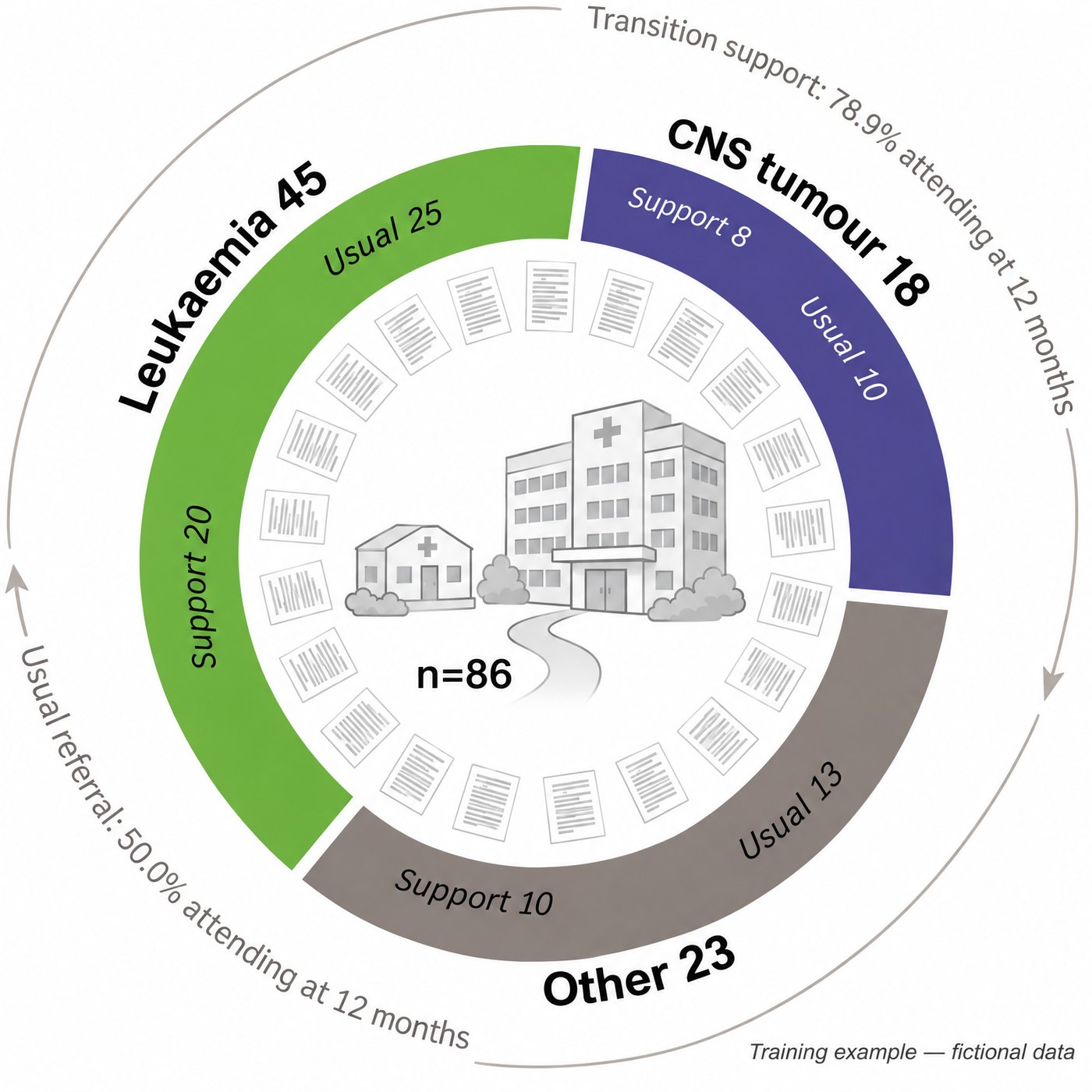
頼んだこと円い帯で内訳を見せる Graphical Abstract の実物を手本に。帯の長さは人数に比例させ、帯の外と中の言葉、外側の弧の言葉を全部指定した。中央の絵は「病院2つと道」に替えた

頼んだ文を見る
Use the attached graphical abstract as an exact template. Keep the identical composition and style: a square white canvas, one large ring made of thick curved colored bands separated by small gaps, bold curved labels written along the outside of each band and smaller italic curved labels inside each band, a ring of tiny tilted document thumbnails (illegible grey text lines) just inside the bands, a soft grey shaded drawing in the center with a short label beside it, and thin grey arc lines with arrowheads around the outside carrying short grey words. Same fonts, weights, flat colors and proportions.
Replace the content as follows:
Center drawing: a soft grey shaded drawing of two hospital buildings, a small one and a large one, joined by a short path. Center label: "n=86".
The tiny thumbnails are referral letters (illegible grey lines, no readable words).
Exactly three colored bands whose lengths are proportional to the numbers: a green band about half of the ring with the outside label "Leukaemia 45" and inside labels "Support 20" and "Usual 25"; an indigo band about one fifth of the ring with the outside label "CNS tumour 18" and inside labels "Support 8" and "Usual 10"; a grey-brown band about one quarter of the ring with the outside label "Other 23" and inside labels "Support 10" and "Usual 13".
Outside arcs with arrowheads, in grey: on the upper right arc "Transition support: 78.9% attending at 12 months"; on the lower left arc "Usual referral: 50.0% attending at 12 months".
No other bands, labels or words. Spell "Leukaemia" exactly as written.
Do not keep any of the original words, names, logos, website addresses, institution names or numbers from the template. Use only the quoted text for any text in the image. All digits half-width. Add in small text in a corner exactly: "Training example — fictional data".
縦長のインフォグラフィック

縦長のインフォグラフィックの手本にした実物
手本にした実物Meadow JF, et al. PeerJ. 2015;3:e1258, infographic by Draw Science, Wikimedia Commons(CC BY 4.0)
縦長のインフォグラフィックを画像AIで作った1枚
画像AIで作った1枚研修用の架空のデータ

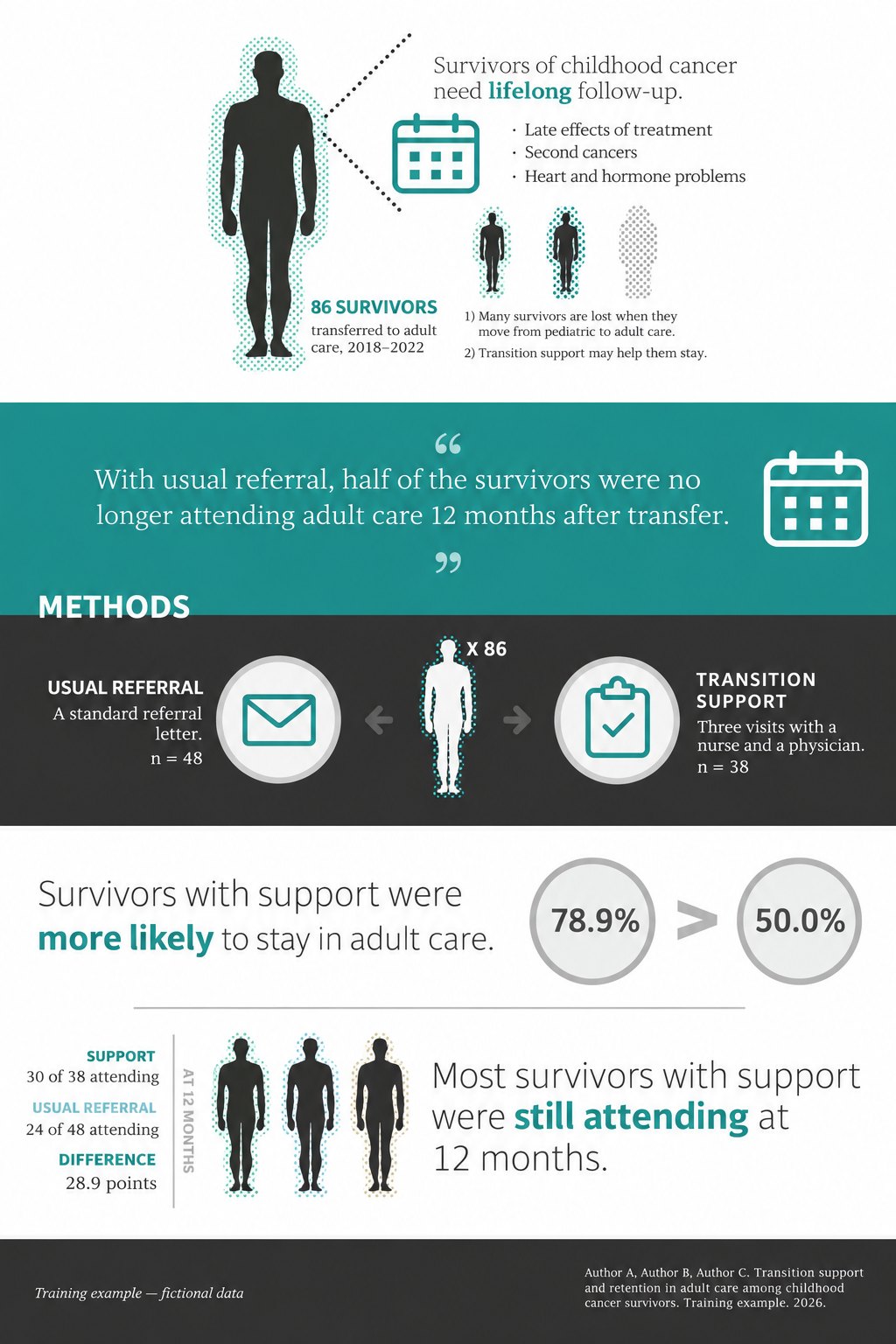
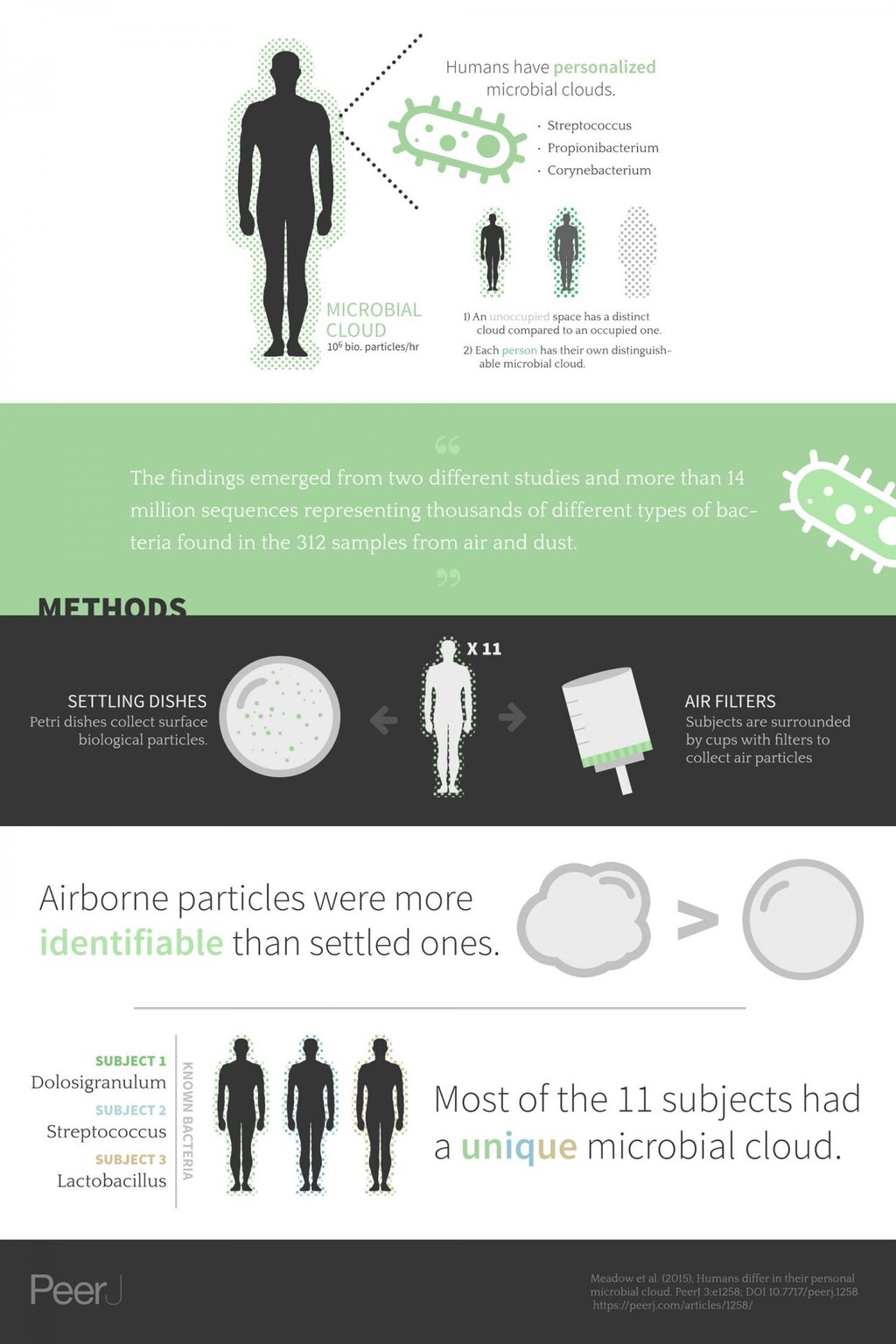
頼んだこと縦長のインフォグラフィックの実物を手本に。人の影絵・色の帯の引用・暗い帯の方法・大きな一文、という段の組み方はそのまま、色を緑から青緑に替え、段ごとに言葉を渡した。頼んでいないリボンの印が1つ入った(そのまま載せている)

頼んだ文を見る
Use the attached infographic-style graphical abstract as an exact template. Keep the identical portrait layout and style: a white top section with a large black human silhouette surrounded by a dotted halo, a light serif headline at its right with one word in the accent color, a short list and three small silhouettes; a full-width soft accent-colored band with a white serif quotation and large quotation marks; a full-width charcoal band with the bold white heading "METHODS", a white silhouette in the middle with arrows to two round icons and small white captions; a white section with one large thin sans-serif sentence with one bold accent-colored word and two simple grey shapes with a "greater than" sign; a thin grey rule; a row with a small labelled list on the left, three black silhouettes and a large thin sentence on the right; and a charcoal footer band with tiny text at the right. Keep the same fonts, sizes, spacing and flat style. Change the accent color from green to teal (#1F8A8A). Remove the logo in the footer (leave that area empty).
Do not draw any bacteria, viruses, cells or germs anywhere: wherever the template has such a drawing, draw a simple teal outline icon of a calendar instead.
Replace the content as follows:
Top section headline: "Survivors of childhood cancer need lifelong follow-up." with "lifelong" in the accent color. List: "· Late effects of treatment" "· Second cancers" "· Heart and hormone problems". Label beside the large silhouette: "86 SURVIVORS" and under it "transferred to adult care, 2018–2022". Under the three small silhouettes: "1) Many survivors are lost when they move from pediatric to adult care." "2) Transition support may help them stay."
Accent band quotation: "With usual referral, half of the survivors were no longer attending adult care 12 months after transfer."
METHODS band: center silhouette with "X 86". Left: "USUAL REFERRAL" and "A standard referral letter. n = 48" beside a round icon of an envelope. Right: "TRANSITION SUPPORT" and "Three visits with a nurse and a physician. n = 38" beside a round icon of a clipboard with a check mark.
Large sentence: "Survivors with support were more likely to stay in adult care." with "more likely" bold in the accent color. To its right two grey circles with a ">" between them; inside the left circle "78.9%" and inside the right circle "50.0%".
Bottom row list: "SUPPORT" / "30 of 38 attending"; "USUAL REFERRAL" / "24 of 48 attending"; "DIFFERENCE" / "28.9 points"; rotated tiny label "AT 12 MONTHS". Three black silhouettes. Sentence at right: "Most survivors with support were still attending at 12 months." with "still attending" in the accent color.
Footer tiny text: "Author A, Author B, Author C. Transition support and retention in adult care among childhood cancer survivors. Training example. 2026."
Do not keep any of the original words, names, logos, website addresses, institution names or numbers from the template. Use only the quoted text for any text in the image. All digits half-width. Add in small text in a corner exactly: "Training example — fictional data".
横長・人の絵で2群を比べる

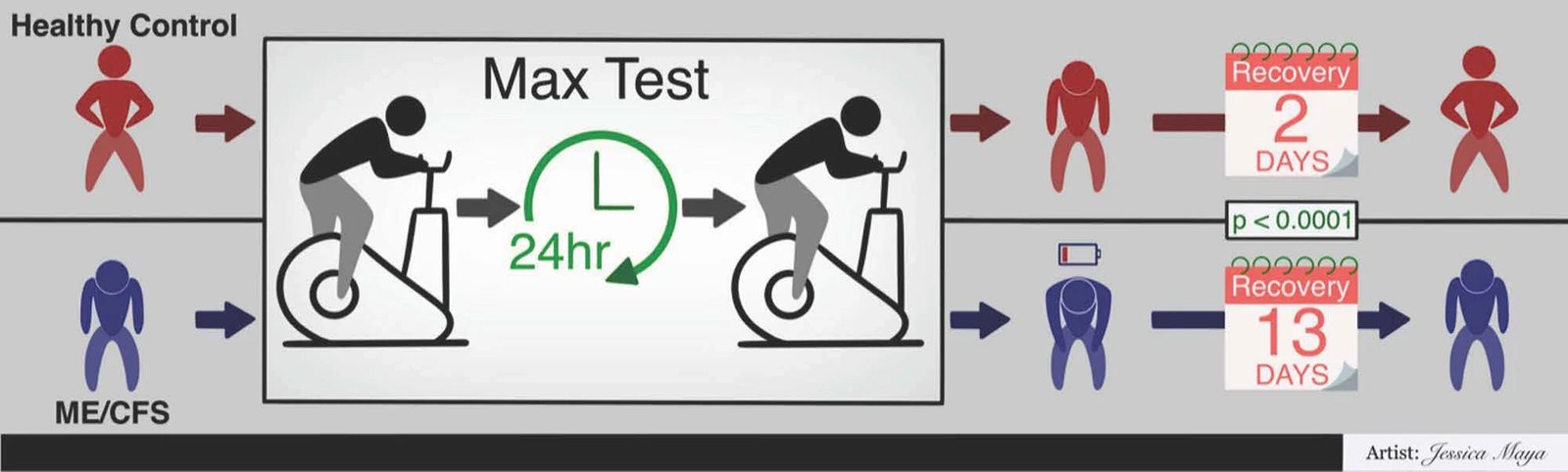
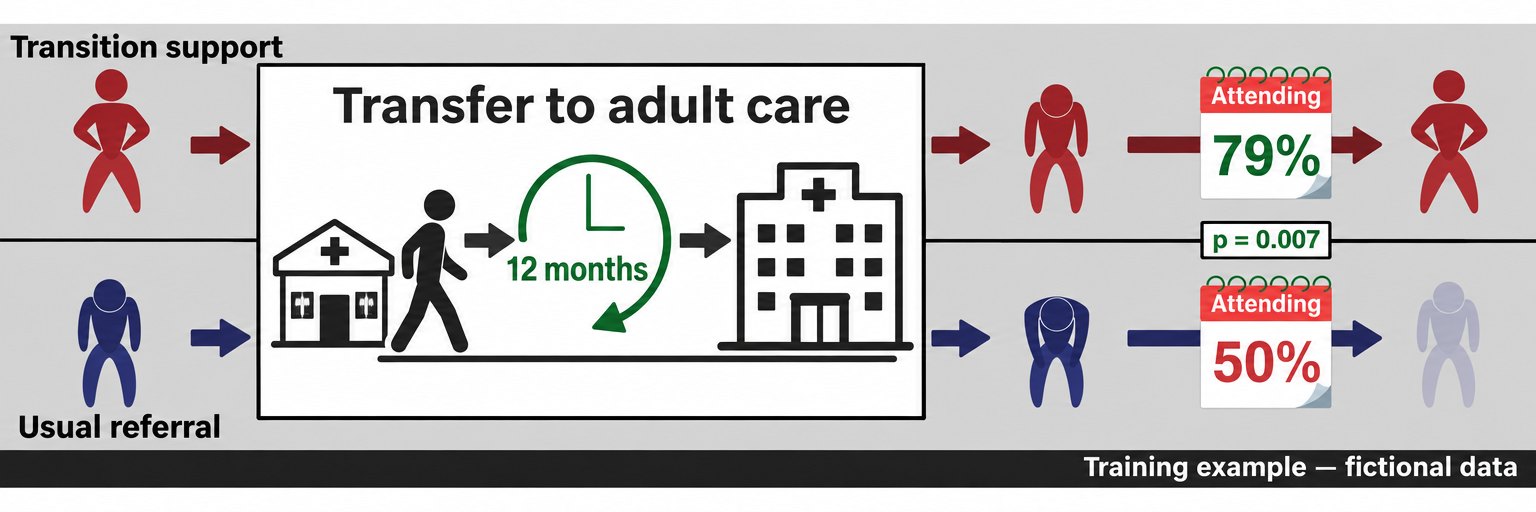
頼んだこと上下2段で2つの群を比べる横長の実物を手本に。人の絵・矢印・中央の箱・右の札はそのまま、中央の箱の中身と札の数字を入れ替えた。78.9% は、札では 79% と丸めて渡した

頼んだ文を見る
Use the attached graphical abstract as an exact template. Keep the identical wide layout and style: a light grey background split into an upper and a lower row by a thin dark line, a bold group label at the top left of the upper row and at the bottom left of the lower row, a simple flat person pictogram in dark red for the upper row and in navy for the lower row, thick arrows in the row color, one large white box with a dark outline in the middle that spans both rows and holds a bold heading and black pictograms with a green circular clock arrow, and at the right of each row a white calendar-page card with a red header strip and a large number, followed by an arrow and a person pictogram; a small white box with the p value between the two cards; a dark strip at the bottom right. Same fonts, weights and flat pictogram drawing.
Replace the content as follows:
Upper row label: "Transition support". Lower row label: "Usual referral".
Middle box heading: "Transfer to adult care". Inside it: a black pictogram of a person walking from a small clinic building toward a large hospital building, and the green circular clock arrow with the green text "12 months".
Upper card: red header "Attending", large green number "79%". Lower card: red header "Attending", large red number "50%". Small box between the cards: "p = 0.007".
The person pictogram at the far right of the upper row stands upright; the one at the far right of the lower row is drawn fainter (lost to follow-up).
Dark strip at the bottom right in white text: "Training example — fictional data".
Do not keep any of the original words, names, signatures or numbers from the template. Use only the quoted text for any text in the image. All digits half-width.